
Skip to content
For guardians, rangers and volunteers

Who looks after the forest when nobody is paid to?

Usually a handful of people who know the place. Give them one workspace that holds what needs doing and remembers who did it.

Who looks after the forest when nobody is paid to?

One forester, one summer

A district forester watches a stand of beech turn brown earlier every year. She knows which sections she can still save and roughly what that would take. What she has no way of doing is turning it into work other people can pick up before the heat arrives.

  1. The stand goes into the register

    Each section becomes an entry in the workspace, carrying what she found on her last walk through it. She types it in herself, the way she would write it in a notebook.

  2. The watering weekends become tasks

    Three weekends of work, published as care quests with what has to be done and by when. The youth group from the village takes two of them.

  3. The record outlives the summer

    She confirms each finished run and it stays on that section of the stand. Next year she starts from what actually happened instead of from memory.

None of this needs a sensor in the ground. It needs somebody who walks the wood, and somewhere to put down what they saw.

The village youth group the council got started

A municipality opens the workspace and hands it to ten young people. They clear litter, log what they find, and watch it count towards something. At that size the free tier covers it.

A friends-of-the-park association

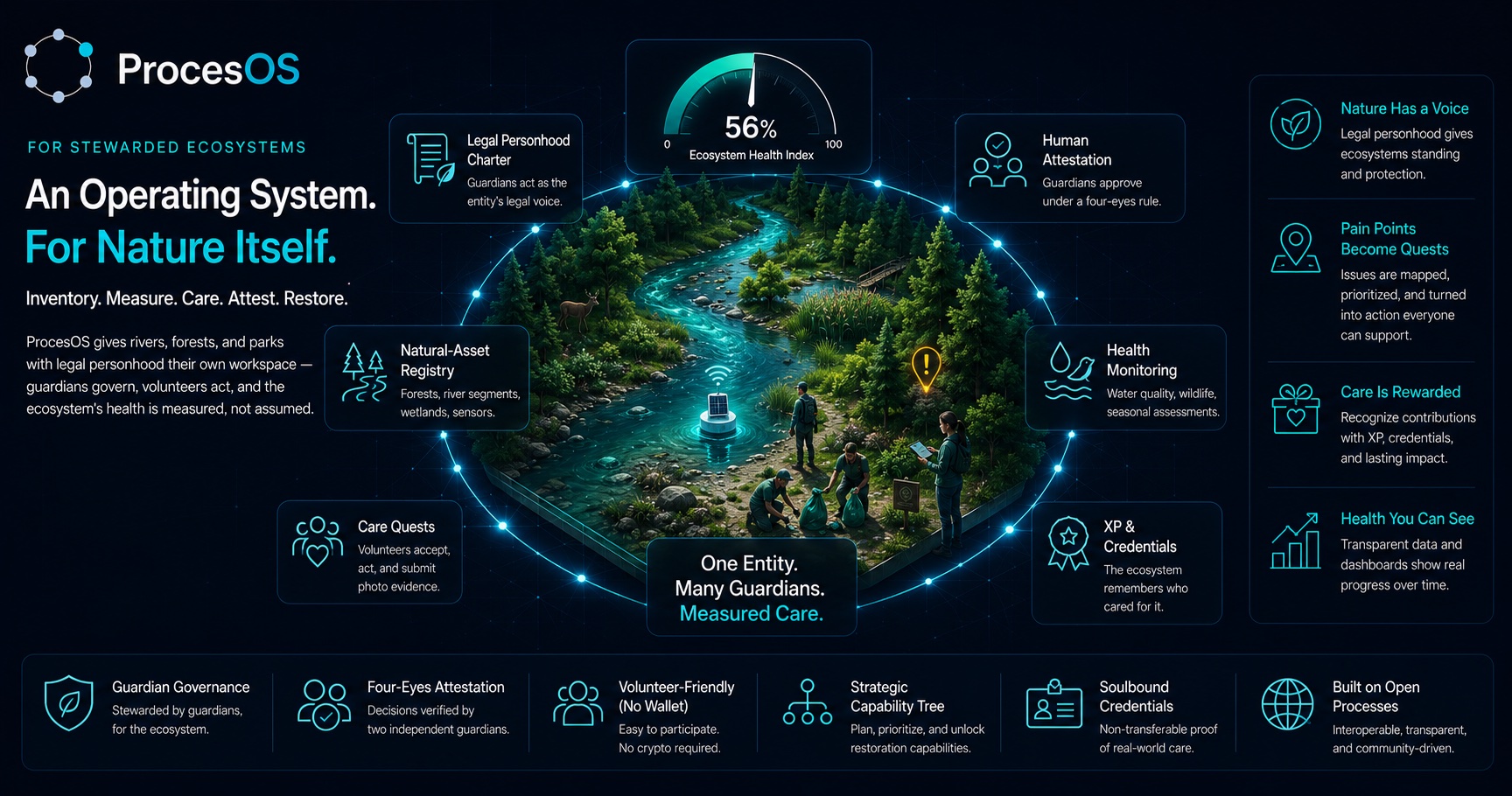
Trails, habitats and events run as processes, with a health score the neighbourhood can rally around.

A river with a legal charter

Guardians run the charter, the monthly water readings people take are entered by hand, and a dumping incident becomes a cleanup quest the same day.

Start with the people who already turn up.

The workspace, the health index and the care quests are live today. Bring the guardians.